.png?width=159&height=32&name=careerarc-logo-h-black%20(3).png "careerarc-logo-h-black (3)")

15 employer branding strategies that actually work
Introduction
Here’s a scenario that probably sounds familiar: you know you need to work on your employer brand, you’ve said so in approximately four different planning meetings, and yet somehow it keeps getting pushed to the bottom of the list because, well, you have actual hiring to do.
Employer branding and hiring aren’t competing priorities. Done right, a strong employer brand is what makes hiring faster, cheaper, and less of a scramble every time a seat opens up. It’s the difference between starting from zero every time and having a warm pipeline of people who already know who you are and actually want to work there.
The good news is that it doesn’t require a massive team, an agency, or a full rebrand to get started. What it requires is consistency, specificity, and a clear sense of what you’re actually trying to say. This guide gives you 15 specific strategies to get started, including what each one is, why it works, how to execute it, and an example to make it concrete.
Note that you don’t need to—and probably shouldn’t—tackle all 15 at once. Pick what fits where you are right now, get consistent with a few things, and layer in more as the program matures. Ready to get started? Let’s dive in!
Quick wins
1. Showcase employee stories
What it is: A short post on your company’s social pages—or better yet, an employee’s own profile—featuring a real team member, their role, how they got there, and something specific they love about working at your company.
This is one of the easiest employer branding strategies to start with because it doesn’t require a major production process or a giant budget. It asks you to notice the stories that already exist inside your company and share them in a way that feels real. That alone goes a long way!
Why it works: Candidates trust employees 3x more than the company itself to give an honest picture of what it’s like to work there [Source: LinkedIn 2023 Employee Advocacy Research]. Personal content also gets dramatically more reach on every major platform—the algorithm favors it, and candidates engage with it more because it feels real rather than produced.
How to do it: Pick one employee per month. Send them three or four questions over Slack or email. Ask how they got into their role, what they enjoy most, what surprised them when they joined, or what they’re proud of recently. Pull two strong quotes, grab a real photo—not a staged headshot—and write a two-to-three sentence intro. Post to LinkedIn, Facebook, X (Twitter), or Instagram, ideally from both the company page and the employee’s own profile.
For example, imagine a regional hospital posts a spotlight on a nurse who started as a per diem hire three years ago and now leads a team of 12. A post like that could easily outperform five job listings combined in terms of engagement, and the ripple effect of a real person’s story showing up in their network is hard to manufacture any other way.
2. Respond to every Glassdoor review
What it is: Actively monitoring your Glassdoor profile and writing a thoughtful, human response to every review (positive or negative!) within two weeks of it being posted.
A lot of companies treat review sites as something to worry about only when there’s a problem. Candidates don’t see it that way. They see them as part of the research process. So whether you’re actively managing that presence or not, it’s already shaping perception.
Why it works: 71% of Glassdoor users say their perception of a company improves when the employer responds to reviews [Source: Glassdoor Essential Employer Branding Statistics]. Employers who boost their overall rating by just 0.5 stars see 20% more job clicks and 16% more apply starts on average. And here’s the underrated (and maybe even counterintuitive) part: responding to negative reviews shows future candidates that you take feedback seriously, which is itself a signal about what it’s like to work there.
How to do it: Assign one person to own review monitoring weekly. For positive reviews, thank the reviewer and reinforce something specific they mentioned. For negative ones, acknowledge the concern, skip the defensiveness, and describe what you’re actively working on.
For example, say a logistics company starts noticing a pattern of reviews mentioning poor onboarding. Responding to each one, then six months later pointing to what’s changed sends a signal to future candidates that the company actually listens.
3. Post your benefits—specifically
What it is: Dedicated social content that highlights what your company actually offers employees: parental leave policies, PTO policies, healthcare, flexibility, retirement, learning stipends, and perks. A lot of companies say they offer great benefits. Very few explain them in a way that’s vivid enough to matter to a candidate scrolling quickly through social content.
Why it works: “Competitive benefits” is one of the least persuasive phrases in the history of job searching. Specific benefits content makes candidates stop scrolling, and CareerArc’s own data shows benefits posts are consistently among the top content types that drive applications.
How to do it: Create one benefits-focused post per month and rotate through categories. Use real numbers wherever you can. Better yet, have an employee share the benefit in their own words—it reads as a testimonial rather than a brochure.
Done well, this kind of content helps candidates picture themselves at your company. Done vaguely, it blends in with every other employer saying basically the same thing.
For example, a mid-size tech company could post something like: “Average PTO our team actually took last year: 19 days. Nobody emails you while you’re out—that’s just how we work here.” That kind of specificity tends to perform far better than a polished graphic listing perks.
4. Build and stick to a content calendar
What it is: A simple monthly, quarterly, or annual plan that maps out what content you’ll post, when, and to which platforms, so you’re never starting from scratch and never going dark for weeks at a time.
This sounds basic, but it solves one of the biggest operational problems in employer branding: inconsistency. Most teams don’t struggle because they have zero ideas. They struggle because employer brand content gets squeezed out by everything else.
Why it works: Sporadic posting trains the algorithm to deprioritize your content, so a basic calendar forces a decision before the week gets away from you. It also reduces the mental overhead of constantly figuring out what to post next. Once the structure exists, execution gets easier.
How to do it: Pick a few main content themes, like culture, benefits, hiring news, employee stories. Plan one post per week—or per month, if you’re strapped for resources—per theme. Then batch-create content once a month so you’re working ahead, not behind.
Pro tip: HireSocial by CareerArc puts your social recruiting strategy on autopilot with AI-assisted social posts that pull directly from your ATS and career site and automated publishing across company, recruiter, and employee profiles.
A calendar doesn’t need to be fancy to work. A shared doc or spreadsheet is enough. The real value is that it makes consistency more likely.
For example, a healthcare staffing team that blocks off two hours every first Monday of the month to batch-create four weeks of content might find that within 90 days, their posting frequency has tripled and their follower growth has picked up—not necessarily because the content is better, but because it’s finally consistent.
5. Ask happy employees to leave a Glassdoor review
What it is: Proactively asking employees who’ve just had a positive moment at work to share their experience on Glassdoor.
Left alone, review volume usually skews negative. That doesn’t necessarily mean the company is worse than average. It often just means that unhappy people are more motivated to write about their experience.
Why it works: 83% of job seekers research reviews before deciding where to apply, so the more well-rounded your review pool, the less likely those applicants will be swayed by only the negative extreme [Source: Glassdoor Essential Employer Branding Statistics].
How to do it: Time the ask after a positive trigger, like a promotion, a strong performance review, or a project win. Send a direct link. Rather than scripting it or over-incentivizing it, just make a genuine ask. Happy employees are typically excited to share, it’s just not top of mind until you ask.
A well-timed ask usually works better than a broad internal campaign because it feels personal and relevant.
For example, after rolling out a new parental leave policy, an HR manager personally messages the handful of employees who were most visibly excited about the change and asks if they’d be willing to share their experience on Glassdoor. Four of them do. The company’s rating edges up, and the reviews mention the policy by name, which means future candidates searching for family-friendly employers can actually find them.
Medium-term strategies
6. Launch an employee advocacy program
What it is: A structured approach to equipping employees to share company content from their own social profiles, giving them pre-written posts to customize, prompts to riff on, or tools that make sharing one click.
A lot of employees are open to posting about their work. They just need content that’s actually worth sharing and a process that doesn’t create more work for them.
Why it works: Companies with a high number of employees sharing quality content are 58% more likely to attract top talent [Source: LinkedIn 2023 Employee Advocacy Research]. Employee posts get significantly more reach and engagement than the same content from a brand account. Plus, your employees’ networks will differ from your company’s network. For example, your engineers’ networks are full of other engineers. Your recruiters’ networks are full of candidates. Both of those options are great when you’re hiring.
That network effect is hard to replicate any other way. Your company page has one audience. Your employees collectively have dozens.
How to do it: Start with five to ten willing participants, but don’t force it. Give them content worth sharing and the creative freedom to shape the content. Then, celebrate participation publicly. HireSocial lets you push content directly to employee and recruiter profiles with one click, which removes the friction that kills most advocacy programs.
The best programs make it easy without making it robotic. Employees should feel equipped, not scripted.
For example, picture a manufacturing company activating 15 employees across three facilities. Within 60 days, two of their highest-performing posts—both shared from individual employee profiles, not the company page—drive more career site clicks than the company page managed all of the previous quarter.
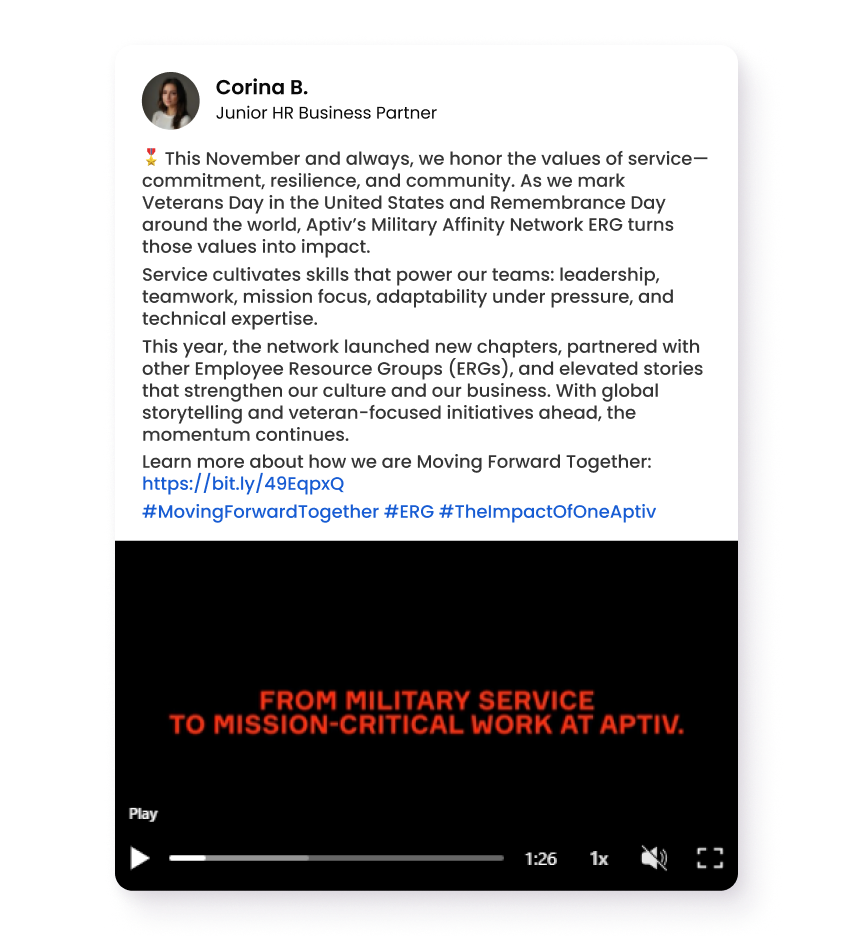
7. Create a referral program
What it is: A formal program that incentivizes current employees to refer qualified candidates—usually through a bonus paid after the referred hire reaches a tenure milestone.
This is one of the most established hiring strategies around, and for good reason. It works both as a sourcing strategy and as an employer brand signal.
Why it works: Referred employees already know what they’re signing up for, tend to fit the culture better, and stay longer. Plus, your existing employees are already the most credible endorsers of your brand.
There’s also an important internal signal here. A referral program quietly communicates that you believe your employees know good people—and that your company is a place worth recommending.
How to do it: Set a clear bonus structure, make the submission process simple, and communicate open roles to your team regularly so employees know what to refer for. Pair the program with a social advocacy initiative so employees can easily share openings from their own profiles.
A referral program only works if people remember it exists. Simplicity and repetition matter more than complexity here.
For example, a financial services company introduces a referral bonus paid at the 90-day mark and starts announcing each referral hire internally by name, including the employee who referred them. Over time, referrals grow from less than 10% of hires to over 20%, and those employees tend to stay longer than hires from other sources.
8. Build culture videos
What it is: Short videos featuring real employees talking about their work, their team, or a specific aspect of the company culture. These can be filmed simply, on a phone if needed.
Video gives candidates something static content can’t always provide: voice, pace, personality, and a more immediate sense of the environment.
Why it works: Video content drives more engagement than text-only posts [Source: Sprout Social]. The bar for production quality has dropped considerably—a candid phone video from a real employee often outperforms polished studio content because it reads as authentic rather than produced.
That’s useful for teams with limited resources because it means you don’t need a full video team to make something effective.
How to do it: Start with three to five videos featuring employees across different functions or locations. Give them two or three prompts to run with. Keep it under 90 seconds, then post to LinkedIn, Instagram Reels, or Facebook. As a bonus, remember to repurpose the footage across multiple posts.
A little planning helps here, but overproduction usually isn’t the goal. You want the employee to sound like themselves.
For example, think about a software company filming a three-minute phone video of an engineer just walking through their typical Tuesday—morning standup, what they’re building, why they joined. Cut into two clips and posted to LinkedIn and Instagram, something like that could easily become the most-shared content of the quarter, and it cost nothing to make.
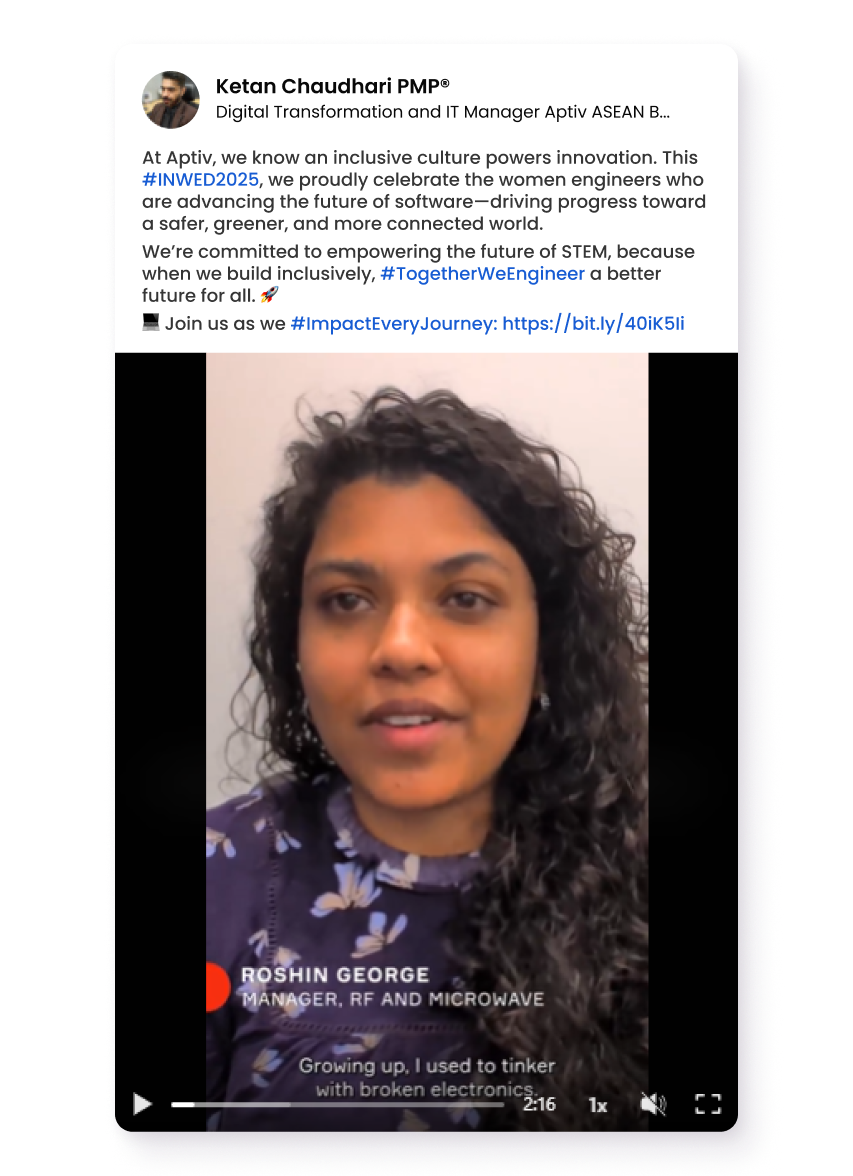
9. Tailor hiring content by role or region
What it is: Creating dedicated employer brand content for specific job families, locations, or candidate audiences rather than using one generic message for everyone.
One-size-fits-all employer branding usually ends up being too broad to really land with anyone.
Why it works: A post about nursing culture won’t resonate with a software engineer, and a post about your San Francisco office doesn’t help someone in Nashville decide whether to apply. Relevance is one of the primary drivers of social content engagement, and tailored content reaches further when deployed through local employee networks.
This matters more as your company grows. The wider your audience, the less likely one general message will serve all of them well.
How to do it: Identify your highest-volume or hardest-to-fill roles and build a small dedicated content set for each—just a few posts that speak directly to that audience. Then, deploy them through employee advocates in that region or function wherever possible.
Even a handful of role-specific assets can make your content feel much more precise.
For example, a multi-location dental group could create a small content series specifically for hygienist roles, featuring hygienists at different offices talking about their schedules, their patient relationships, and what their specific location’s culture is like.
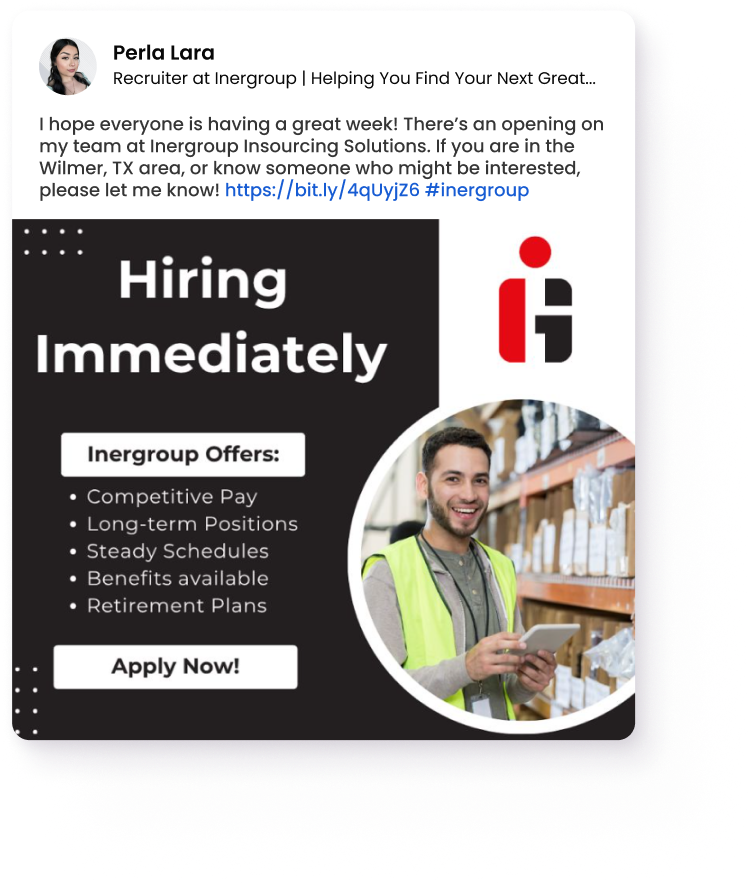
10. Post DEI content backed by real specifics
What it is: Social content that communicates your company’s commitment to diversity, equity, and inclusion through employee stories, ERG highlights, concrete progress updates, and cultural celebrations that reflect your actual workforce.
This is an area where candidates can tell very quickly whether a company is sharing something real or just checking a box.
Why it works: CareerArc’s own survey data found that over 26% of candidates say DEI messages shared by the employer would influence them to apply for a job [Source: The Future of Recruiting 2021]. But generic awareness posts don’t move the needle. Specific, evidence-backed content does. Candidates can tell the difference between a checkbox and a genuine commitment.
That’s why specificity matters so much here. People are looking for proof, not just language.
How to do it: Share employee spotlights that naturally reflect your diversity. Highlight ERG events and leaders. If you have data, share it—even acknowledging where you’re still improving builds more credibility than a polished claim of perfection. Use relevant community hashtags to reach the audiences you’re trying to connect with.
The strongest DEI employer brand content feels grounded in lived experience, not abstract messaging.
For example, a national retailer could publish a quarterly DEI update that includes one real metric, one initiative they launched that quarter, and one employee quote.
Long-term plays
11. Define your Employee Value Proposition (EVP)
What it is: A clear, honest articulation of what your company offers employees and what makes it genuinely worth choosing over alternatives—the core promise that anchors all your employer brand content.
Your EVP is what keeps the rest of the work from drifting. Without it, every post, job description, and recruiting conversation can start to head in a slightly different direction.
Why it works: Without an EVP, every piece of content pulls in a slightly different direction. With one, your job descriptions, social posts, career site copy, and interview conversations all reinforce the same story.
That kind of consistency matters because candidates are looking for patterns. When the message lines up across channels, trust builds faster.
How to do it: Run an internal listening exercise with tools like surveys, exit interviews, or recurring themes from performance reviews. Identify what’s the most distinctive. Draft a one-to-two sentence EVP, test it with current employees, and refine before going external. If the people already working there don’t recognize it, go back to the drawing board.
A strong EVP shouldn’t sound impressive only in a strategy meeting. It should sound familiar to your actual employees.
For example, picture a professional services firm that runs internal surveys and discovers employees consistently cite mentorship and fast career growth as their top reasons for staying. They build their EVP around that, restructure their hiring content accordingly, and start attracting a noticeably different—and better-fit—pool of mid-career candidates.
12. Create a careers-dedicated social media page
What it is: A separate social account—typically on LinkedIn, Instagram, or both—specifically for employer brand and recruiting content, distinct from the main corporate brand page.
For some teams, this is what finally gives employer branding a real home.
Why it works: A careers page sidesteps the need for marketing buy-in to start posting talent content. It gives your TA team ownership, allows for a distinct tone and content mix, and means candidates searching specifically for hiring content can find a dedicated destination rather than sifting through product updates.
That separation can be especially useful for companies whose main brand channels are heavily focused on customers, product releases, or investor-facing content.
How to do it: Set up the page with a clear bio that makes the purpose obvious—“Life at [Company] | Open Roles | Culture.” Cross-promote it from the main brand page. Post a mix of job openings, culture content, employee spotlights, and benefits highlights multiple times per week if you have bandwidth.
The value here grows over time. A careers page becomes more useful as it builds an archive and a following.
For example, a large healthcare system could create a dedicated “@LifeAt[Company]” Instagram just for employer content. Built up over time with a consistent mix of job openings, culture posts, and employee stories, that kind of account can become a destination for exactly the nursing and allied health candidates they need to reach.
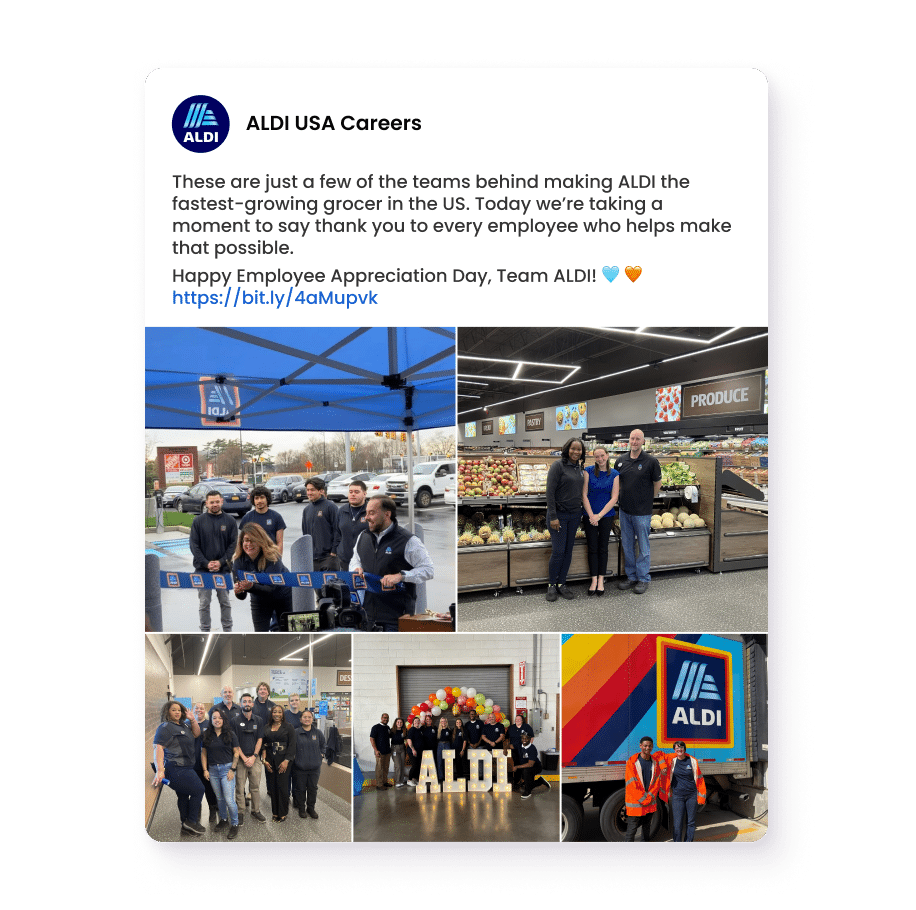
13. Partner with marketing to align your employer brand strategy
What it is: A formal working relationship between your TA team and your marketing department to align on brand voice, share content resources, and coordinate social media strategy for recruiting.
Employer branding usually works better when it isn’t being built in a silo.
Why it works: Content shared by employees gets more engagement than content from brand channels, but tapping into that requires marketing and HR to be building together rather than in separate silos [Source: LinkedIn 2023 Employee Advocacy Research]. Marketing has design resources, audience data, and institutional knowledge of the brand. TA has the candidate insight. The combination is more effective than either operating alone.
When those two groups operate separately, employer brand content often ends up either looking off-brand or missing what candidates actually care about.
How to do it: Start by getting marketing into your employer brand planning meeting, not just informing them after decisions are made. Align on brand voice for recruiting content. Ask marketing to build a small set of employer brand templates you can use independently. Define who owns what so neither team steps on the other.
This doesn’t need to become a huge cross-functional initiative. Even a small amount of alignment can make a big difference.
For example, a retail TA team that’s been designing their own social graphics for two years might find that one planning session with marketing yields 12 branded templates and a shared content calendar. Suddenly the employer brand posts look like they belong to the same company as the consumer brand, and the main corporate account starts resharing them.
14. Build an always-on recruiting funnel strategy
What it is: Treating employer branding as a year-round pipeline-building activity rather than a switch you flip when roles open, so that when you need to hire, there’s already a warm audience of people who know and trust your company.
This is one of the biggest mindset shifts in the whole article. Employer branding works best when it’s ongoing, not reactive.
Why it works: Hiring shouldn’t be a fire drill every time a seat opens up. A full-funnel strategy means you’re showing up consistently at the awareness stage—before anyone is on the job market—so that when they are, you’re already familiar.
Candidates don’t usually go from never hearing of you to applying instantly. They encounter your company multiple times. An always-on strategy respects that reality.
How to do it: Map your content to funnel stages. Awareness content—culture posts, values content, employee stories—runs all the time. Consideration content—benefits, career paths, team spotlights—runs consistently. Job posts run when roles are open. The ratio shifts moment by moment with your priorities, but the presence never goes dark.
That’s what makes hiring feel less reactive later. You’ve already done the warming work in advance.
For example, a logistics company that commits to posting employer brand content three times per week year-round might find that when they need to hire 50 warehouse workers ahead of peak season, they already have a warm, engaged audience. The roles fill faster than the previous year not because the jobs are different, but because the company isn’t introducing itself for the first time.
15. Conduct an annual employer brand audit
What it is: A once-a-year review of your full employer brand picture—social content performance, Glassdoor and review site sentiment, career site analytics, candidate survey feedback, and internal engagement data—to make sure everything is still pulling in the same direction.
At a certain point, employer branding isn’t just about creating more content. It’s about checking whether the story you’re telling still matches reality.
Why it works: The fastest way to lose credibility is when what you’re saying externally doesn’t match what employees are experiencing internally. An annual audit catches it before it becomes a real problem and gives you the data to make a case internally for where to invest next.
It also helps you avoid drift. A message that felt accurate a year ago may no longer reflect what employees care about now.
How to do it: Pull together five data sources: content engagement metrics, Glassdoor rating and review themes, career site traffic and conversion rate, new hire survey feedback—did the role match what was advertised?—and any internal engagement or eNPS data. Look for gaps between what you’re saying and what candidates or employees are experiencing. Prioritize the biggest disconnect and fix it first.
This is where employer branding gets sharper over time. You stop guessing and start seeing patterns.
For example, imagine a professional services firm runs their first audit and discovers that their social content consistently emphasizes career growth—but their exit interview data shows the top reason people leave is lack of flexibility. The content isn’t wrong, it’s just missing the thing candidates actually care about most. Catching that gap early is exactly what the audit is for.
How to prioritize
Remember: you don’t have to do all 15 strategies. Trying to usually means none of them get done consistently, which is the only way any of them actually work.
A practical place to start: consider picking two quick wins this week, one medium-term strategy to build toward over the next 90 days, and one long-term play to start laying groundwork for now. Revisit every quarter and add the next thing.
That kind of pacing makes employer branding much more manageable. It also makes it more likely that the work will actually stick, because you’re building habits and systems rather than creating a short-lived burst of activity.
For teams without a dedicated social media manager—or with an overloaded one—tools like HireSocial by CareerArc are built to make consistency achievable with AI-generated content from your existing assets, multi-platform scheduling, and employee advocacy built in.
Frequently Asked Questions
Usually, the best place to start is with the strategy you can actually sustain. For a lot of teams, that means employee stories or a simple content calendar. They’re relatively low lift, they create visible momentum, and they help you build consistency before you move into more ambitious plays like EVP development or a dedicated careers page.
You don’t need to post constantly. You need to post consistently. For many teams, one to three posts per week is enough to build momentum. If that’s unrealistic, even a few strong posts per month can work—as long as you’re not disappearing for long stretches and starting over every few weeks.
Yes, but the strategy has to match the bandwidth. A small team usually won’t launch all 15 strategies at once, and they shouldn’t try to. Start with a few repeatable motions—employee stories, benefits posts, Glassdoor review responses, a basic content calendar—and build from there. Small teams tend to do better when they focus on consistency rather than volume.
Option 1: Automate social posts on their behalf! This is the lowest hanging fruit to get started without having to give instructions or build a case for why this is worth someone’s time.
Option 2: Start with people who are already inclined to engage. Don’t script them too heavily. Give them prompts, examples, and support, but leave room for their own voice. Participation usually grows when employees see that the content is genuine, easy to share, and appreciated internally.
Look at both content metrics and hiring outcomes. Engagement, follower growth, career site traffic, review sentiment, apply starts, referral volume, and candidate quality can all tell part of the story. The goal isn’t just to get likes. The goal is to make hiring easier and improve how candidates understand your company before they ever apply.
HireSocial by CareerArc helps teams stay consistent without adding as much manual work. It supports AI-generated content based on existing assets, multi-platform scheduling, and employee advocacy tools that make sharing easier. For lean teams, that can make the difference between having an employer branding plan and actually executing one.