

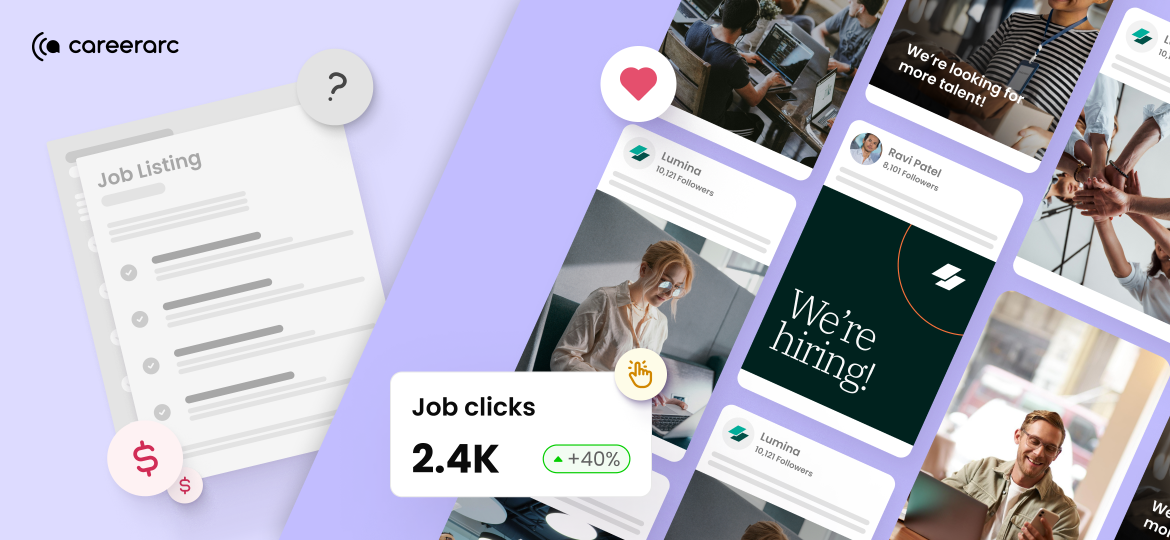
Over the past year, many employers have seen a sharp drop in job traffic—some are reporting as much as 60–70%. And it’s not a coincidence.
As part of their “Healthy Marketplace” initiative, Indeed has been phasing out organic (unpaid) job listings since 2023, and as of late 2024, most of those free postings have disappeared entirely. What was once a reliable source of inbound candidate traffic has shifted into a fully pay-to-play model.
That change is already rippling across the hiring landscape. And it’s raising a big question for recruiting teams everywhere: If free job visibility is gone, what comes next for the talent pipeline?
The shift from organic exposure to paid visibility
For years, Indeed’s organic job listings provided a dependable baseline of visibility. Even without advertising budgets, your roles could still surface in search results and attract active candidates who were looking for their next opportunity.
Now, only sponsored listings appear, and the rest are buried or gone completely. This shift benefits companies with larger budgets who can afford to sponsor every role, ensuring their jobs stay at the top of search results. But smaller or mid-sized employers? They’re left competing for attention with fewer resources and less reach.
Cost per hire is also rising. With fewer organic channels feeding your pipeline, employers are spending more per applicant and per hire—recent benchmarks place the average cost per hire around $4,700 and climbing.
Here’s the part that often gets missed: organic listings were never reaching most of the talent pool in the first place. Job boards are great at connecting with active jobseekers, the roughly 30% of people who are already searching and ready to apply. But the other 70 percent, the passive talent, are not spending their time scrolling job boards or casually checking what roles are out there. They were never discovering your openings through organic listings to begin with.
So when that free visibility disappears, the real impact is that you’re leaning even harder on a small slice of candidates. Job boards start to feel like a more limited, more transactional touchpoint, and the volume in your pipeline reflects that. Unless you have a plan to show up in the places where passive talent actually spends time, the gap becomes pretty obvious.
For a lot of employers, this is the moment where the old recruiting playbook stops making sense and something new has to take its place.
The ripple effect on hiring teams
When job traffic drops, the instinct is often to assume the talent pipeline has dried up. But in this case, it’s not the candidates—it’s the channel. Fewer applicants doesn’t necessarily mean fewer people are interested in your roles. It just means fewer people can find them.
Of course, the loss of organic visibility has created a new layer of pressure for recruiters. Teams that once relied on a steady flow of inbound applicants are now spending more time and budget just to stay visible.
For smaller companies, that pressure can be especially difficult to absorb. Competing with larger organizations that can outspend you on every platform isn’t sustainable, and it often leads to frustration rather than results. But it’s also a wake-up call. Because while job boards are tightening access, social media is opening new doors.
The rise of social recruiting
Social recruiting isn’t new, but it’s becoming the most natural next step for employers who’ve seen their job board traffic dry up. At its core, social recruiting means using social platforms—LinkedIn, Instagram, Facebook, even TikTok—to share your culture, showcase your people, and promote open roles. The goal is to build a brand presence that makes people want to work for you in the first place.
Instead of waiting for jobseekers to find you, social recruiting helps you show up where they already are: scrolling, reading, and connecting. Candidates aren’t just searching job titles anymore. They’re looking for companies they can relate to. When they see your posts, stories, or videos, they start forming an impression of what it might feel like to join your team.
And candidates really are discovering employers this way! In Gem’s 2025 Recruiting Benchmarks report, companies under 5,000 employees reported making more hires from recruitment marketing efforts than from job board traffic. Even larger organizations still see recruitment marketing as a major contributor to their hiring funnel. When your brand shows up consistently on social and through employee networks, it makes you easier to remember—and easier to choose.
That familiarity matters because it becomes the reason a candidate pays attention when the right role pops up. The final apply click might happen on a job board, on your careers page, or even through a referral, but the interest behind that click often starts with the awareness you built on social.
Why social recruiting fills the organic listing gap
When organic listings disappear, visibility doesn’t have to. It just moves somewhere else. Social recruiting fills the gap by creating the same kind of organic awareness that job boards used to provide—only now, it’s fully in your control.
Every post, every story, every employee spotlight becomes a touchpoint. Candidates might not apply right away, but they’re seeing your name, your team, and your values regularly. That consistency builds trust in a way sponsored listings never could.
It’s also sustainable. Job ads expire the moment you stop paying for them, but your social content keeps working in the background. It’ll show up in feeds, get shared, and build ongoing recognition over time.
Last but not least, it’s accessible. You don’t need a massive budget to compete. What you need is creativity, consistency, and a clear sense of what makes your company stand out. A short video from your team, a photo from a volunteer event, or a post celebrating an internal promotion can reach thousands of people organically.
The new recruiting reality
Job boards will always have their place, but the recruiting landscape has shifted. Platforms that once offered free visibility are becoming advertising engines. And while that’s good business for them, it leaves many employers scrambling to adapt. The answer isn’t to abandon job boards, but it is time to rebalance your strategy.
Social recruiting lets you diversify your reach, build awareness among new audiences, and strengthen your employer brand all at once. It turns recruiting from a series of paid transactions into an ongoing conversation. Instead of renting attention, you’re owning it.
Over time, that shift creates a compounding advantage. Candidates who’ve seen your content before will recognize you later. Applicants who felt connected to your story are more likely to finish the process. Even those who don’t apply today may come back months from now because your brand stuck with them.
What should employers do next?
Indeed’s phase-out of organic listings marks a turning point in recruiting. Free visibility is no longer guaranteed, and the cost of staying seen is rising. But that doesn’t mean your reach has to shrink. It just means your strategy has to grow.
- Start simple. Post regularly. Share stories from your employees. Celebrate your wins. Give people a reason to remember your name before they ever need a job. (If you need help, HireSocial is here to get you started!) The tools might have changed, but the goal hasn’t: connect with the right people, at the right time, in the right way.
By leaning into social recruiting, you can rebuild the organic momentum you lost, reach candidates where they already are, and create lasting visibility that no paywall can block.


